
From Global Goals to Verified Action: How the UN SDGs, the GHG Protocol, and GNFZ Work Together (Part 1)
This article is the first in a two-part series outlining how GNFZ certification supports and complements the UN SDGs and the GHG Protocol.
Sustainability has entered an era of implementation. What was once voluntary is now shaped by market expectations, regulatory pressure and investor and stakeholder scrutiny. Organizations are increasingly fluent in net zero carbon global frameworks, yet many lack a practical mechanism to integrate those frameworks into operational decisions and performance management, creating a gap between disclosure and demonstrable and verifiable impact.
The UN Sustainable Development Goals (SDGs) outline the world we need by 2030: A low-carbon economy, resilient communities, shared prosperity, and equitable growth. The seventeen SDG’s, which were unanimously endorsed by the 193 Member States of the U.N in 2015, serve as a framework for action for governments, public and private corporations and non-governmental organizations.
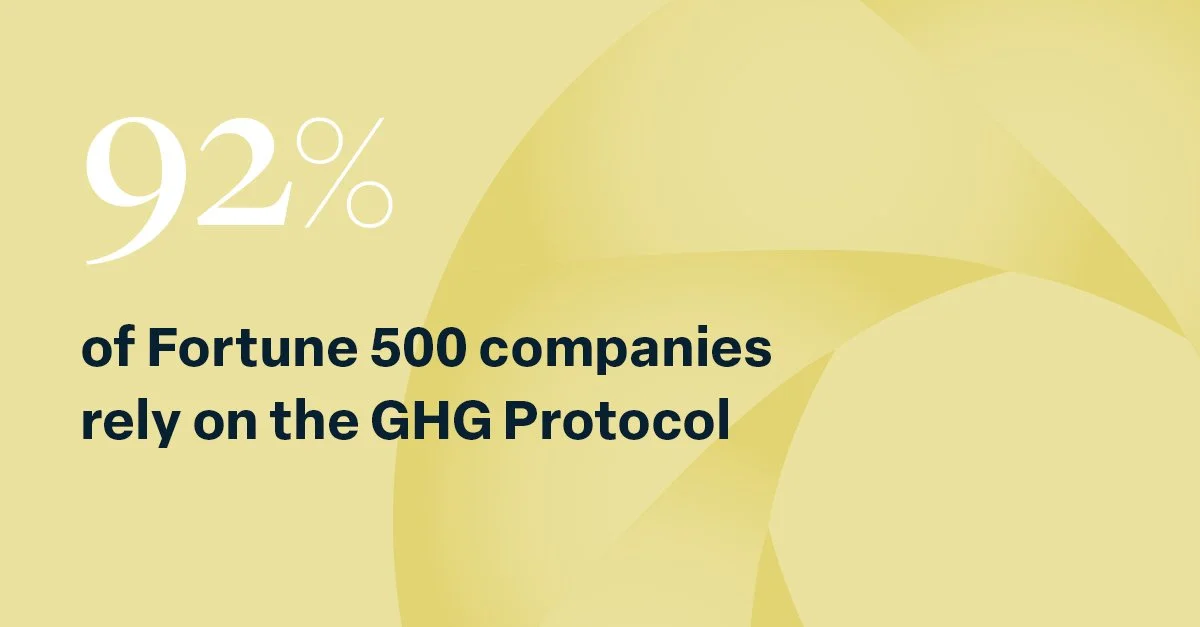
The GHG Protocol, which is managed by a partnership between World Resources Institute and the World Business Council for Sustainable Development, has become the global standard for measuring greenhouse gas emissions, ensuring climate data is consistent, credible, and comparable. It is used by 92% of Fortune 500 companies and 97% of disclosing S&P 500 companies in their GHG accounting, as well as governments, cities, major public institutions globally and beyond.
Yet a critical disconnect persists. Organizations report against the SDGs and disclose emissions using the GHG Protocol, but too often cannot translate those frameworks into verifiable outcomes or demonstrate sustained performance improvement.
That’s where the Global Network for Zero (GNFZ) comes in. GNFZ certification operationalizes both the SDGs and the GHG Protocol, helping organizations move beyond reporting and intent toward performance, accountability, and continuous improvement.
The Missing Link Between Measurement and Meaningful Impact
When we talk to potential clients, we like to frame the interconnectedness of the SDGs, the GHG Protocol and GNFZ in three simple ways:
The SDGs define the destination – the the global ambition for climate action, clean energy, sustainable cities, and responsible production outlined in the 17 consensus categories.
The GHG Protocol defines the rules – how emissions are measured across Scope 1, 2, and 3 in a way that has built critical trust.
GNFZ builds the pathway – translating frameworks into real-world net zero outcomes.
If the SDGs define the world we need and GHG Protocol ensures we measure progress correctly, GNFZ makes that progress real, verifiable, and scalable. GNFZ certification is based on the GHG Protocol and provides a tool for organizations to make progress toward their UN SDGs and other climate goals and verifies and certifies that progress, using an incremental recognition process to recognize all the steps organizations make along the way.
GNFZ bridges the gap between the UN SDGs and the GHG Protocol by aligning GHG inventories and reduction pathways with SDG-linked impact goals; embedding emissions accounting into business strategy, capital planning, and operations; and ensuring decarbonization efforts deliver measurable climate and social outcomes, not just disclosures. Clients are guided by an agile technical platform and a global team of decarbonization experts ensuring accuracy and financial and strategic efficiency.
The SDGs call for measurable progress and shared accountability. The GHG Protocol ensures data integrity. GNFZ ensures net zero performance, by linking emissions reductions to certification, continuous improvement and comparable outcomes.
Advancing Multiple SDGs Through One Net Zero Strategy
GNFZ helps advance multiple SDGs through a single net zero strategy, using the same underlying GHG Protocol data. Below is a mapping of how GNFZ helps organizations unlock progress across the SDGs:
SDG 13 - Climate Action Through Verified Net Zero: SDG 13 is the strongest area of overlap. The core objective is to reduce GHG emissions and build climate resilience. This is directly addressed by net zero commitments and GHG Protocol Scope 1, 2, and 3 emissions accounting as part of GNFZ certification. GNFZ builds on the GHG Protocol to establish accurate Scope 1, 2, and 3 baselines to help plan and design sector-specific net zero pathways, and independently verify progress against targets.
SDG 7 – Affordable & Clean Energy: Net zero implementation and achievement relies heavily on renewable energy adoption, energy efficiency, and GHG Protocol Scope 2 (electricity emissions) directly relates to this SDG. GNFZ supports renewable energy strategies validated through Scope 2 accounting and energy intensity reduction.
SDG 11 – Sustainable Cities & Communities: This SDG is especially relevant for transport emissions and buildings in an urban infrastructure. GNFZ applies both city and building level GHG accounting to drive compliance, resilience, and equity outcomes through GHG Protocol Scope 3 categories of business travel, employee commuting, logistics and distribution, amongst others.
SDG 12 – Responsible Consumption & Production: This SDG is closely tied to Scope 3 emissions, such as sustainable sourcing, supplier emissions, and circular economy practices. Scope 3 insights from GNFZ certification enable supplier engagement, circularity and procurement transformation.
SDG 17 – Partnerships for the Goals: Net zero cannot be achieved by working alone. This category supports net zero by way of value chain collaboration, industry alliances, and carbon markets and offsets governance under Scope 3 covered by GNFZ certification.
SDG 8 – Decent Work and Economic Growth: Transition to Net Zero affects green jobs, brings new flourishing economies and is increasingly referenced in climate disclosures.
Moving From Sustainability Storytelling to Sustainability Performance
The SDGs demand measurable progress and shared accountability. The GHG Protocol ensures data integrity. GNFZ ensures performance, by linking emissions reductions to certification, continuous improvement and comparable outcomes across sectors and geographies. GNFZ thus makes possible the shift from sustainability storytelling to sustainability performance.
By linking emissions reductions directly to certification, benchmarking, and continuous improvement, GNFZ replaces fragmented disclosures with comparable outcomes across sectors and geographies.
This alignment also matters beyond sustainability teams:
Governments use SDGs to set policy direction.
Investors rely on GHG Protocol aligned data to assess climate risk, and
GNFZ connects both to enterprise-level execution — enabling bankable net zero strategies, credible capital deployment, and confidence for regulators, investors, and communities alike.
Beyond Net Zero: Toward Net Positive Impact
The SDGs envision more than emissions reductions — they point toward a regenerative and inclusive future. By grounding climate action in verified data and continuous improvement, GNFZ helps organizations go beyond net zero toward net positive impact, where decarbonization also delivers health benefits, economic resilience, and community value.
Call to Action
If your organization already reports against the SDGs or measures emissions using the GHG Protocol but wants to prove progress, not just promise it — GNFZ certification is the next step.