

This article first appeared in Mahesh Ramanujam’s monthly LinkedIn newsletter, Dispatches in Decarbonization, on October 30, 2026. Subscribe on LinkedIn to receive these updates.

For years, net zero conversations in boardrooms and investor meetings have centered on the year an organization intends to fulfill its commitment. Those years are a frequent refrain – whether 2030, 2040, or 2050. I’ve spent much of my career encouraging leaders to set those goals, and I believe we need to bring the same attention and focus to a question that tells us more about the work underway:
What did your organization decarbonize this year?
A target tells us where a business intends to go, while an account of the past twelve months reveals whether its day-to-day decisions are moving it toward that goal. An organization can publish a detailed climate strategy and still postpone the investments necessary to deliver it, leaving aging equipment in service and purchasing practices unchanged while the work required to fulfill its commitment grows.
Long-term commitments matter because they help businesses plan investments and give employees and suppliers a shared objective. I also believe our industry has a responsibility to examine what follows an announcement, long after it stops making news.
The work behind the commitment
Anyone who works with building owners, facilities teams, or sustainability professionals understands how much effort decarbonization requires. Replacing equipment means making an investment case, securing funding, and coordinating installation, often while a property remains occupied. Changes to energy procurement or supplier requirements involve negotiations and decisions across departments whose priorities may differ.
That work rarely receives the attention given to a new commitment, yet it determines whether the commitment can be fulfilled. As a community, we should give greater weight to the actions an organization funded, the facilities that improved, and the emissions reductions those investments delivered.
We also need to recognize the people responsible for delivering these commitments. A facilities manager who identifies unnecessary overnight energy use or a procurement director who works with suppliers to improve emissions data is helping turn a corporate objective into an operating best practice. Their experience should inform the strategy, including the assumptions executives make about what is feasible and what is not.
Reports and assessments support this process. A comprehensive emissions inventory can reveal problems that were previously invisible, while a common reporting framework makes information easier to compare. Their value becomes clearer when we examine how the findings influenced a capital budget, brought an overlooked building to management’s attention, or changed a procurement decision. Completing the report should lead to decisions about what the organization will do with its findings.
Understanding what changed
Answering the annual decarbonization question requires care with the data. An eight percent emissions reduction could reflect equipment upgrades, improved controls, or cleaner electricity procurement, but it could also result from a mild winter, lower production, or the sale of a property. Each explanation has different implications for the organization’s ability to sustain progress and must be fully understood.
Changes in calculation methods and emissions factors can also affect results, so leaders need to understand how much improvement came from their interventions and how much came from other circumstances. Where carbon offsets are used, those claims should be explained separately from reductions in the organization’s emissions.
The same scrutiny applies when emissions rise. A growing business may operate more efficiently while its total emissions increase, requiring an honest account of both outcomes and a plan to address the increase. An improving intensity metric alone cannot explain how the business will reach net zero.
Annual results also need context because buildings have different starting points, major retrofits take time, and investment cycles vary. What matters is whether leadership understands the results well enough to act on them. Explaining why a retrofit was delayed, or why an investment delivered less than expected, helps teams improve their next decision and gives stakeholders a useful account of progress.
Turning a portfolio commitment into property decisions
For context, consider an organization with a hundred buildings in varying climates and a 2040 net zero target. Its commitment applies to the entire portfolio, but each property presents different challenges: one needs a heating system replacement, another runs equipment beyond occupied hours, and a third operates efficiently while relying on an emissions-intensive electricity supply.
A portfolio-wide emissions total can obscure those differences, particularly when strong results at a few properties attract most of the attention. Leadership needs visibility into individual assets to determine where investment will have the greatest effect and which improvements could be applied elsewhere.
The first year might involve establishing baselines, improving data collection and correcting operating schedules. Equipment replacements and electricity procurement changes could follow, with larger renovations timed to lease expirations or the end of a system’s useful life. This sequence gives owners a practical way to connect a distant target with the daily realities of managing their properties.
Local on-the-ground knowledge matters throughout that process. An improvement that works at one property may require a different approach elsewhere because of climate, grid conditions, tenant needs or access to financing. A credible portfolio strategy gives teams room to respond to those differences while maintaining consistent expectations for measurement, accountability, and evidence of results.
At every stage, an owner should be able to explain what was completed, what it achieved and what remains unresolved. Projected savings from a proposed retrofit should remain clearly identified as projections until operating data demonstrates the result. The annual review then becomes an opportunity to direct investment and address underperformance using evidence from the buildings themselves.
Making progress an executive responsibility
Sustainability professionals can assemble evidence and recommend improvements, but a company-wide commitment depends on executive decisions about budgets, procurement, operations, and of course, people. Before the next board presentation, CEOs should expect a clear account of last year’s emissions, the reliability of the underlying information, and the reasons for any change.
That review should examine which planned actions were completed, what actions were delayed, and what independent evidence supports the progress claimed. It should also establish what the organization will fund over the next twelve months and who will be responsible for delivery.
These are familiar management responsibilities involving capital, asset performance and business risk. Honest answers may expose gaps, but acknowledging those gaps and assigning responsibility for closing them gives a commitment the authority and resources it needs to influence everyday decisions.
The review should also influence the next budget cycle. If a promising project remains unfunded year after year, leadership needs to examine the financial assumptions and approval process behind that outcome. Understanding those barriers can help organizations revise investment criteria and give teams a realistic route to delivering the improvements already identified.
Making annual progress possible
At the Global Network for Zero, we help organizations make this process practical, wherever building owners begin. An owner with incomplete data needs a credible baseline, while a team with limited capital needs help prioritizing improvements. Organizations that have already invested need to verify results and determine their next steps.
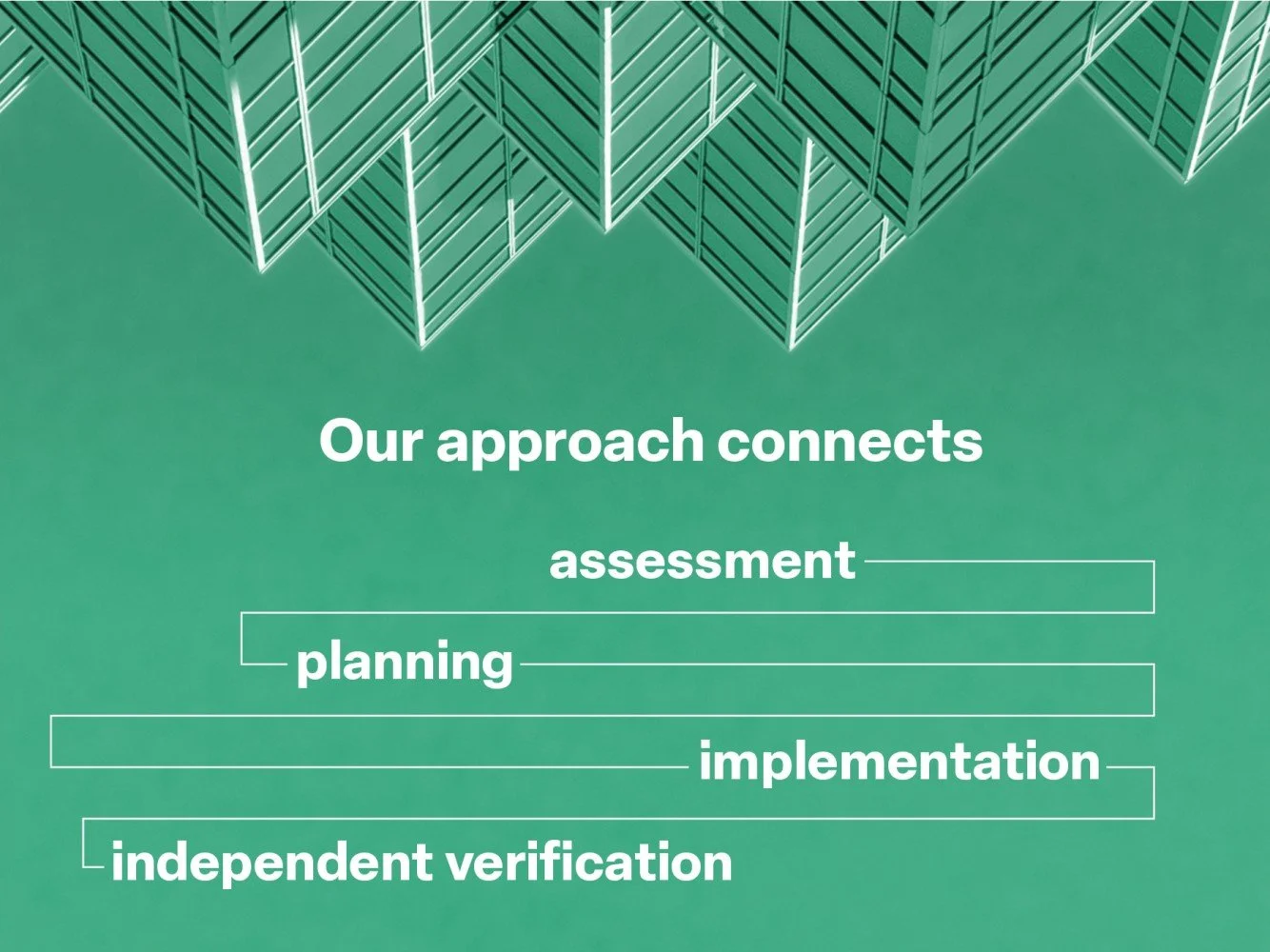
Our approach connects assessment, planning, implementation, and independent verification through an incremental, staged certification pathway from Assess to Plan to Progress to Final achievement. Each milestone must clearly communicate what has been accomplished and what remains ahead, giving organizations a way to demonstrate progress as they work toward net zero.
With GNFZ, there are no prerequisites and no barriers to entry to begin, and organizations can build on the standards and rating systems they already use. Grounded in the GHG Protocol and adapted to local conditions, our approach addresses energy, emissions, water, and waste for buildings at the design, construction, and operations lifecycles. Ultimately, GNFZ certification helps teams understand performance and make improvements that deliver measurable environmental and financial benefits.
The value of certification depends on keeping evidence connected to the claim and helping organizations make better decisions. A commitment to 2030, 2040, or 2050 should influence the budget approved today, the equipment replaced this year, and the purchasing practices that shape future emissions.
I believe we can reach net zero, and much of that confidence comes from the people already doing the work, including the owners willing to invest, the facilities teams finding ways to improve and the leaders making decarbonization part of how they run their businesses. Our responsibility is to help more people turn that willingness into progress, wherever they begin, whether they are already close to net zero or whether they have not funded an efficiency upgrade in multiple decades.
If we do that well, “What did you decarbonize this year?” becomes a question more organizations can answer with confidence, and an invitation to go further in the year ahead.