
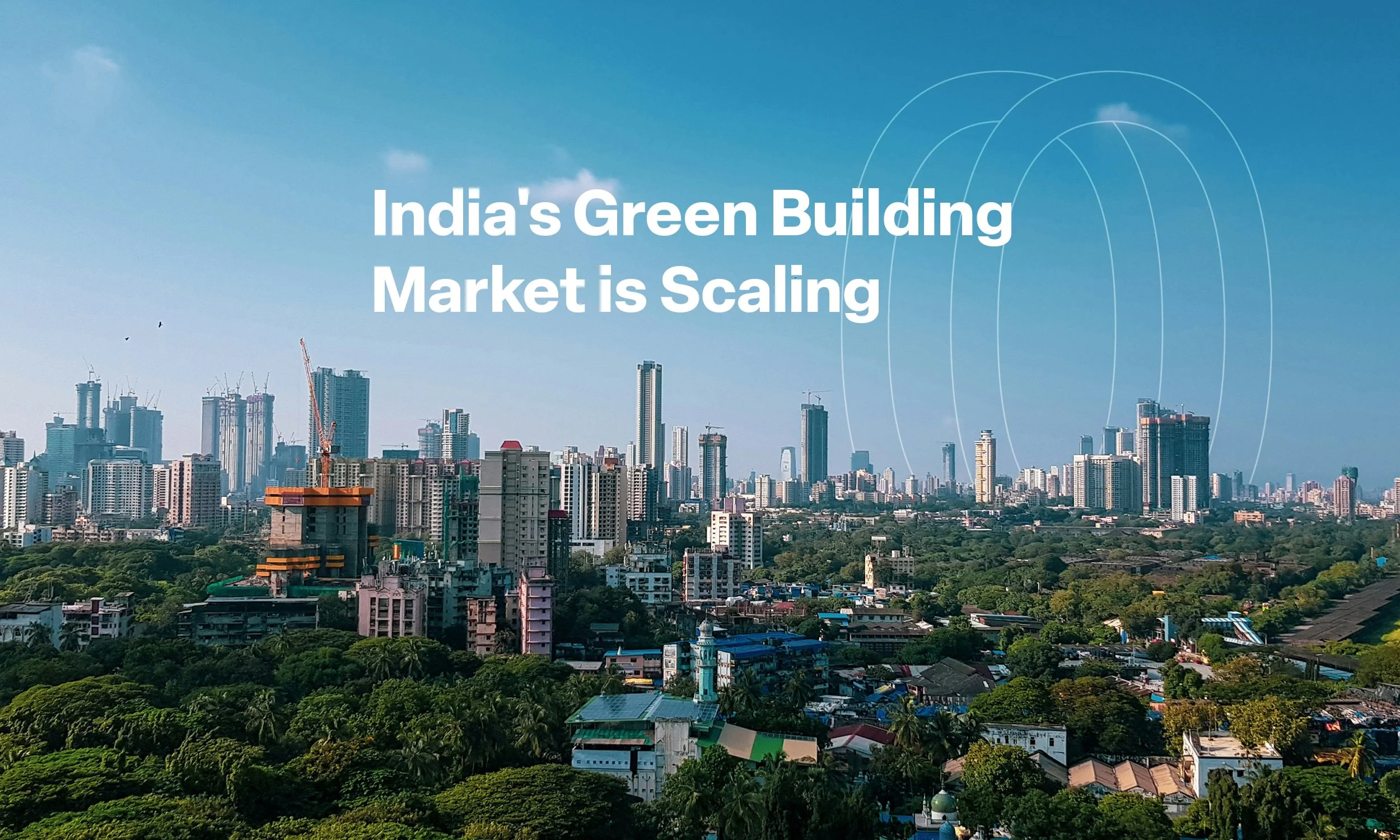
India's green building market is scaling. GNFZ is helping turn that growth into verified net zero performance.
India's green building market is expanding rapidly, with developers, businesses and institutions increasingly integrating sustainability into their buildings and operations. But as the market grows, an important question comes into focus: Are buildings delivering the environmental performance they promise?
In Maharashtra alone, 4,754 registered projects cover 5.01 billion square feet, representing approximately 30% of India's registered green building footprint, according to a November 12, 2026 report by The Times of India. Mumbai alone accounts for 2,057 of these projects.
These numbers reflect significant progress. Yet, the next phase of India’s green building transition will require more than expanding the number of registered green buildings. It will require measuring actual environmental impact, implementing meaningful reductions and demonstrating results over time.
This is where Global Network for Zero (GNFZ) is helping advance the market. As an independent net zero certification body, GNFZ works with building owners, developers, businesses and portfolio operators to establish emissions baselines, develop practical decarbonization plans, implement reduction strategies and independently verify progress. Through its work across India's commercial real estate, manufacturing, education, warehousing and residential sectors, GNFZ is helping organizations move beyond sustainability commitments toward measurable, verified performance.
Understanding How Buildings Actually Perform
Green building rating systems have played an important role in advancing sustainable construction. They provide structured benchmarks, encourage better design practices and help integrate sustainability into decisions on energy, water, materials and resource efficiency. They remain an important foundation for the sector.
However, a building's environmental performance continues to evolve long after design and construction are complete. Occupancy patterns, energy consumption, operational practices, equipment efficiency and maintenance all shape its emissions throughout its lifecycle. Performance anticipated at the design stage does not necessarily translate into performance once a building is occupied.
One of the most important distinctions between GNFZ and traditional building rating systems is its emphasis on actual performance. Many sustainability frameworks and building certifications evaluate design strategies, modeled energy performance, installed systems or the presence of particular features. While these approaches are valuable, they do not necessarily demonstrate the environmental outcomes a building achieves in operation.
GNFZ takes a different approach. Grounded in the Greenhouse Gas Protocol (GHG Protocol), our certification process evaluates measurable environmental performance through documented data, emissions accounting, performance assessments and independent verification. Rather than prescribing a particular rating system or design approach, GNFZ provides a flexible, rating-system-agnostic pathway for organizations to measure and reduce Scope 1, 2 and 3 emissions.
This is particularly important for India's existing building stock. New developments can build in sustainability from the outset, but existing buildings and operational portfolios must be understood through actual operational data, not assumptions based solely on design specifications or initial assessments.
The objective is not simply to recognize a building's sustainability credentials, but to understand its environmental footprint, identify opportunities for improvement and demonstrate reductions over time.
A Practical, Incremental Pathway to Net Zero
For building owners, developers and organizations managing multiple assets, decarbonization begins with understanding their current emissions footprint. That requires a structured assessment of energy consumption and other emissions sources, clearly defined operational boundaries, reliable activity data and consistent greenhouse gas accounting methodologies.
GNFZ's certification model provides a structured pathway that meets organizations where they are and recognizes progress throughout their net zero journey. Rather than making certification an all-or-nothing achievement, GNFZ offers opportunities for recognition at successive stages:
Assess and Measure: Establish a verified baseline and understand the organization's environmental footprint, including Scope 1, 2 and 3 emissions, energy, water and waste.
Plan: Translate assessment findings into a practical Net Zero Plan, identifying priority emissions sources, reduction opportunities, interventions and measurable milestones.
Progress and Improve: Implement strategies, monitor performance and demonstrate measurable improvements against established baselines and targets.
Final Verification: Independently verify results and recognize organizations that achieve their net zero certification goals.
This incremental approach allows organizations to receive recognition as they advance, rather than waiting until they achieve their ultimate net zero target. It also provides a clear connection between investment, implementation and environmental outcomes.
GNFZ's approach offers several important advantages:
Actual performance over modeled assumptions: Certification is grounded in documented performance data rather than relying exclusively on design projections.
A complete emissions picture: Organizations evaluate Scope 1, 2 and 3 emissions rather than focusing solely on building energy consumption.
Continuous improvement: Organizations can receive recognition at multiple stages of their journey, demonstrating progress toward their ultimate net zero goals.
Independent verification: Performance data and progress are evaluated through an independent certification process.
Flexibility: GNFZ is rating-system agnostic, allowing organizations to build on existing certifications, sustainability programs and building management systems.
For consultants, this creates an opportunity to move beyond advising clients on what they should implement and help them demonstrate what those strategies actually achieve.
What GNFZ’s Work Across India Demonstrates
GNFZ’s engagements in Maharashtra illustrate how a measurable, performance-based approach can be applied across different building types. Each project presents distinct operational challenges and opportunities, reinforcing the importance of developing decarbonization strategies around actual emissions profiles rather than applying a uniform template.
Mindspace REIT: Advancing Portfolio-Wide Decarbonization

Mindspace Airoli West part of Mindspace REIT’s portfolio, which is currently pursuing portfolio-wide certification with GNFZ,
One of the most significant examples is GNFZ’s partnership with Mindspace REIT, which announced in April 2026 that it would transition its entire approximately 39 million square foot portfolio to a GNFZ net zero certification pathway. The initiative represents one of India's largest portfolio-level decarbonization efforts in the commercial real estate sector.
The partnership moves beyond individual building certifications toward a unified portfolio-wide approach. GNFZ and Mindspace REIT will develop a comprehensive decarbonization roadmap addressing Scope 1 emissions from direct operations, Scope 2 emissions from purchased energy and Scope 3 emissions across the value chain, including tenants and suppliers. To date, GNFZ's assessments cover approximately 39 million sq. ft. of operational building space, providing a foundation for establishing an FY2024 energy-related emissions baseline of approximately 182,000 tCO₂e. This is the starting point for a portfolio-wide net zero plan, which will prioritise HVAC and chiller optimisation, better lighting and building management systems, greater use of renewable electricity, and lower fuel consumption through electrification.
The plan will also identify priority buildings, set interim milestones and guide investment decisions. The partnership demonstrates how GNFZ's methodology can help large real estate portfolios move from individual building-level recognition toward a consistent, measurable strategy for decarbonization at scale.
Pravin Masalewale: Achieving Net Zero Energy in Warehousing
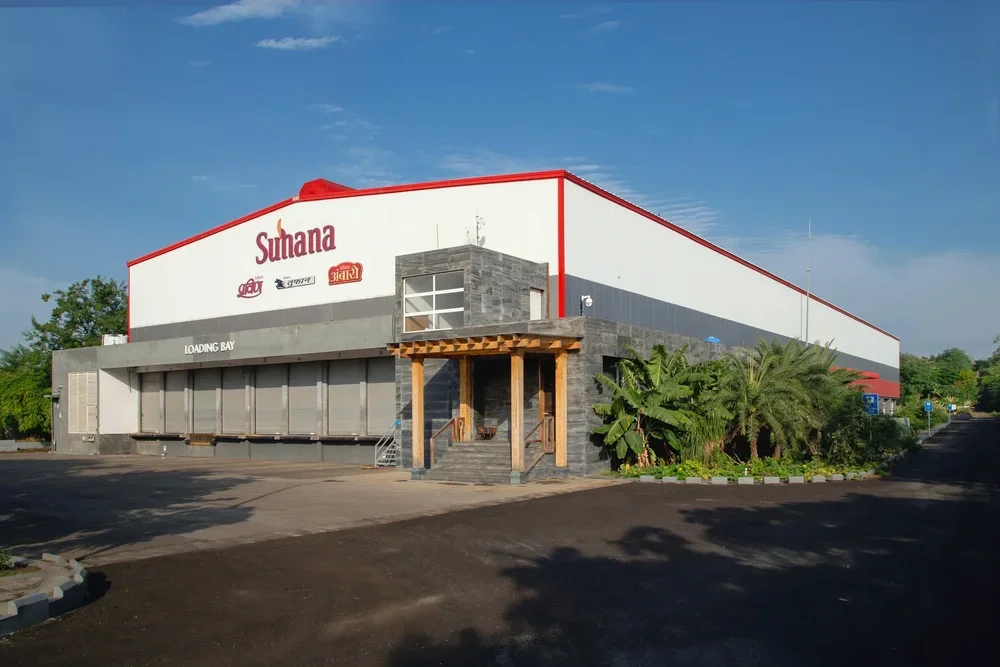
Pravin Masalewale achieved GNFZ Net Zero Operations: Energy certification for their Pune warehouse in 2025.
At the other end of the spectrum, GNFZ's work with Pravin Masalewale demonstrates how its approach can deliver measurable results in industrial and warehouse operations. The company's warehouse in Pune achieved GNFZ Net Zero Operations: Energy certification in 2025. Its pathway included a high-performance on-site solar photovoltaic installation, exporting excess renewable electricity to the grid, efficient energy management, reduced fossil fuel use, and robust monitoring and reporting. The facility is now operating at net energy positive, generating more renewable energy than its total energy consumption.
This project illustrates how operational improvements and renewable energy strategies can translate into independently recognized performance, even in building types that face different challenges from traditional commercial office environments.
The approach extends to GNFZ's other engagements in Maharashtra, including DY Patil University, DuFlon's manufacturing portfolio, Ajmera Residential and ANJ Factory. Each presents distinct operational and energy challenges, with projects progressing from assessment and net zero plan development to implementation and verification. This reflects GNFZ's asset-specific approach to decarbonization, built around actual emissions profiles rather than a one-size-fits-all template.
Existing Buildings and Portfolios Deserve Greater Attention
Much of the conversation on green buildings focuses on new construction. Yet a significant opportunity lies in improving buildings that are already operating. Commercial properties, industrial facilities, educational campuses and residential developments across India can cut emissions through better energy management, infrastructure upgrades and operational optimization.
For organisations managing multiple assets, this means moving beyond building-by-building assessments to portfolio-level emissions management. A consolidated view lets decision-makers identify high-emission assets, prioritise investments, set consistent reduction targets and track progress. It also helps sustainability teams connect environmental objectives with operational and financial decisions. As India's green building footprint expands, the ability to measure and manage emissions across both new and existing buildings will be central to meeting national and organizational climate ambitions.
Making Progress Measurable and Verifiable
India's growing green building footprint represents an important achievement for the country's real estate and development sectors. The next opportunity is to build on that momentum by linking green building adoption to measurable decarbonization. That means looking beyond individual ratings and sustainability commitments to understand actual emissions, develop practical reduction strategies, implement improvements and independently verify results.
GNFZ is helping organizations make this transition through an independent, flexible and incremental certification pathway that recognizes performance across emissions, energy, water and waste. Its work across India demonstrates how the approach can be applied to individual buildings, businesses and large portfolios, while accommodating the different challenges and opportunities of each.
For building owners, developers, businesses and the consultants who support them, the opportunity is clear: sustainability must be measured not only by the buildings we construct or the certifications we achieve, but by the environmental impact we actually reduce.
Ultimately, the success of India's green building transition will be judged not only by the scale of its registered footprint, but by the measurable reductions in emissions and resource consumption it delivers—and the progress that can be independently demonstrated.