
Breaking the Linear Lockdown: How Net Zero Waste and GNFZ Turn Waste from Cost Center to Competitive Advantage
We are still running a 21st-century economy on a waste model designed for the 19th. That contradiction is no longer just an environmental embarrassment; it has become an existential business problem sitting squarely on corporate risk registers and a core battleground for any credible net zero strategy.
For decades, the global economy has institutionalized a single, catastrophic logic: Take – Make – Waste. We extract virgin resources, process them into goods, use them and then discard them. For a long time, this ‘linear’ model was viewed as the unavoidable cost of doing business. Today, it is a compounding liability in a world where material volatility, climate risk, and investor scrutiny are all rising at once.
We are in a ‘Linear Lockdown’. We are trapped in a system where the cost of inaction is becoming impossible to ignore, and the only escape key is a radical, disciplined shift toward net zero waste (NZW) anchored in standards, data, and independent verification. This is where partners like the Global Network for Zero (GNFZ) become critical, translating ambition into lifecycle-wide performance.
The Invisible Crisis
When we talk about waste, we usually visualize volume — mountains of plastic or overflowing bins. By 2050, global municipal solid waste is projected to surge from about 2.3 billion tonnes in 2023 to nearly 3.8 billion tonnes annually if business as usual continues. But volume is only the visible tip of the iceberg. The real emergency — the one that keeps risk managers and environmental scientists awake at night — is toxicity and the invisible pathways through which waste poisons the systems we depend on.
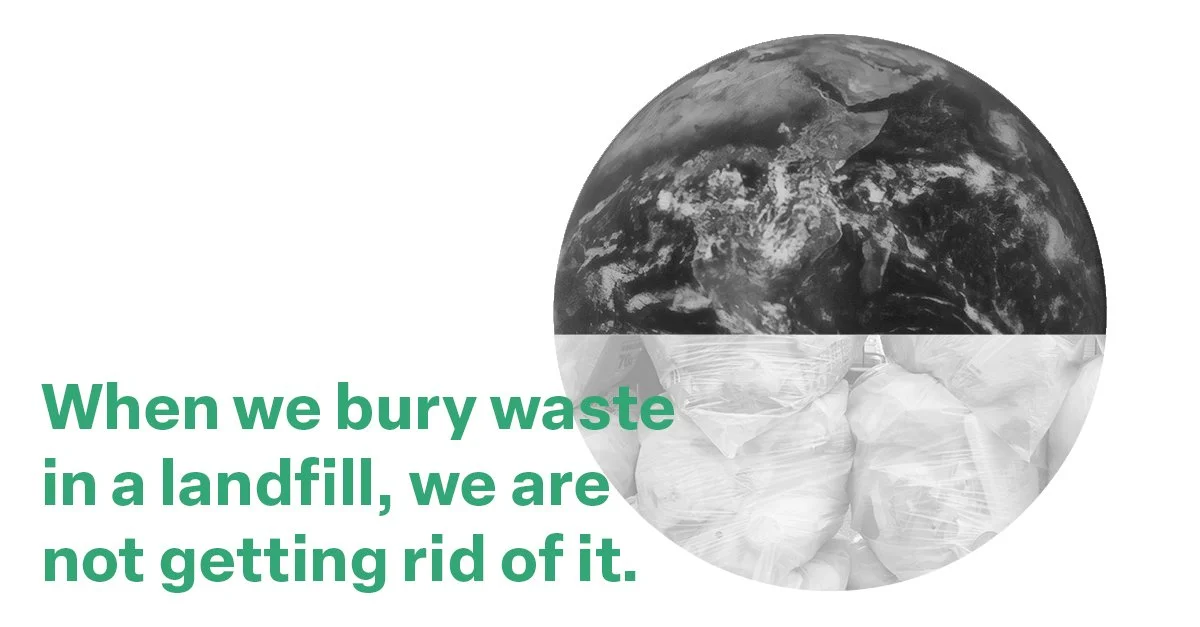
When we bury waste in a landfill, we are not ‘getting rid’ of it. We are simply storing it while it undergoes a chemical transformation. As organic matter decomposes alongside plastics and industrial byproducts, it generates leachate — a dark, foul-smelling liquid cocktail. Studies from landfill sites across high-growth markets like India show that this leachate is often laden with heavy metals such as cadmium, lead, and arsenic, alongside hazardous nitrates and ammonia. Gravity does the rest. This toxic liquid percolates through the soil, bypassing natural filtration layers, and infiltrates groundwater aquifers.
The result is a cascading failure of natural assets: communities near dump sites find their water sources compromised by chlorides and metals, soils lose their biological life, and contaminants move up the food chain into human health. When you factor in healthcare costs, lost agricultural productivity, climate damage, and remediation, the global annual cost of mismanaged municipal waste is forecast to approach USD 640 billion by 2050 without urgent intervention. This cost cliff is the primary reason waste has migrated from a peripheral CSR talking point to a central boardroom discussion; a nexus of resource risk, regulatory exposure, and financial opportunity.
From Scarcity To Circular Gain
If the linear model is a liability, the circular economy is the asset. The alternative to the ‘Take – Make – Waste’ doom loop is a transition to a circular economy that redesigns how value flows through markets. This is not about marginally better recycling; it is about decoupling growth from waste by design.
Recent global waste and circularity outlooks indicate that committing fully to circular, zero-waste pathways can slash system-level waste costs and deliver net annual economic gains on the order of USD 100 billion or more by 2050 when compared to business as usual. At a broader macro level, circular models across sectors are estimated to unlock trillions in additional economic output through material efficiency, resilience, and reduced externalities.
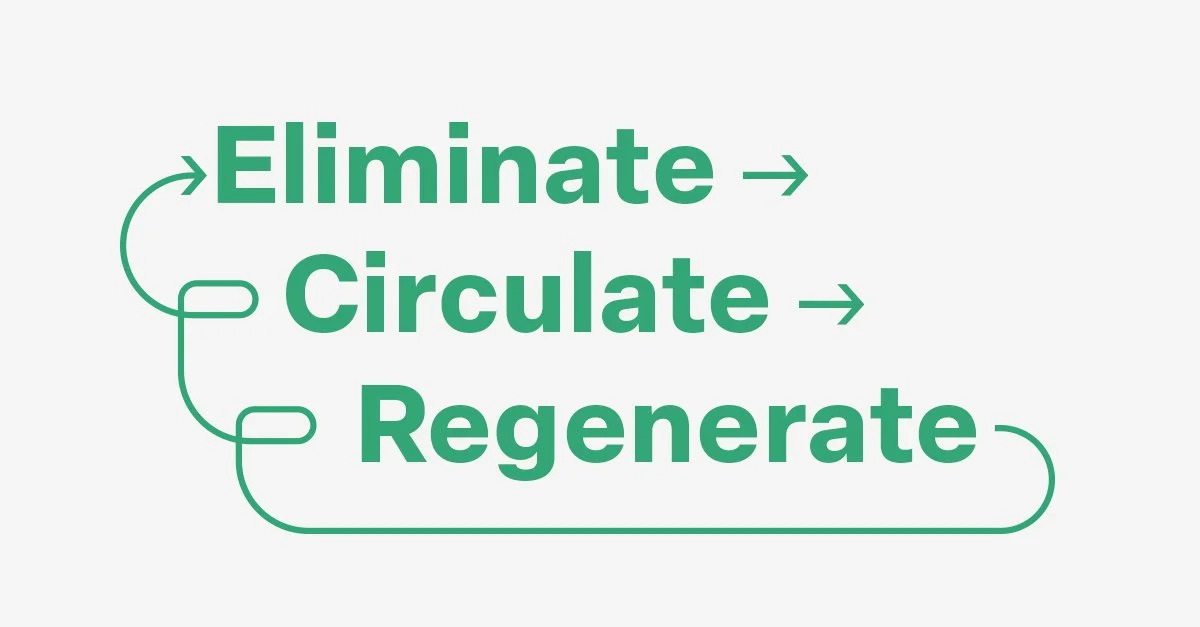
This economic engine operates on three foundational design rules: Eliminate: Design out waste and pollution at the source. Circulate: Keep products and materials in use at their highest value via reuse, repair, remanufacture, and high-quality recycling. Regenerate: Restore natural systems instead of extracting from them indefinitely.
To translate this philosophy into a measurable operational mandate, leading organizations are turning to NZW and increasingly to frameworks such as GNFZ’s net zero certifications, which treats waste as a core performance pillar across Design, Construction, and Operations, not a side metric.
Defining Net Zero Waste
NZW is not a vague aspiration; it is a rigorous operational framework. But it looks very different depending on where you sit in the asset lifecycle. GNFZ’s approach reflects this reality, structuring its net zero certification across lifecycle stages and four core categories (Emissions, Energy, Water, and Waste), so that waste is integrated into the full net zero journey rather than bolted on at the end.
Design: Simulation for Operations
Design is not merely about aesthetics; it is a simulation of operational reality. True NZW requires architects and engineers to move beyond theoretical sustainability and size infrastructure based on robust data rather than legacy assumptions. By baking material recovery facilities (MRFs), organic processing capacity, and space for modular, demountable systems directly into the blueprint, the design phase becomes the primary defense against operational failure; solving waste physically before it is ever managed logically.
This is where a partner like GNFZ adds structure. Its design stage guidance and scorecards push project teams to hardwire segregation, back-of-house logistics, material passports, and circular procurement into the design brief, rather than retrofitting them after occupancy. For owners juggling net zero carbon, resilience, and tenant experience, this integrated lens is often the difference between a certification plaque and a genuinely future-ready asset.
Construction: Implementation and Reality
Construction is the project’s collision with reality; a finite period defined by intense, one-time waste generation. It is the initial proving ground for the circular framework, where NZW principles are stress-tested on massive volumes of construction and demolition (C&D) debris. Before the facility ever faces the daily rhythm of operational waste, this stage establishes the discipline of diversion, ensuring that steel, concrete, wood, and other streams are segregated and recovered rather than dumped.
GNFZ’s lifecycle model explicitly recognizes performance at this stage, incentivizing contractors and developers to implement 4-stream segregation, high-recovery MRFs, and reliable tracking of diversion rates across their portfolio. Coupled with GNFZ’s digital platform, project teams can capture real-time waste data during construction and use it to inform ESG disclosure, procurement strategy, and lessons learned for future phases.
Operations: Operating for Diversion
Operations is where the model meets the human element. It requires a permanent transition from passive waste collection to active, onsite processing and high-fidelity segregation. Success here is dictated more by governance than technology: resident and staff training, unambiguous SOPs, incentives, and strict behavioural enforcement are the single most critical factors. When this discipline holds, the building evolves from a static waste generator into a dynamic, closed-loop ecosystem, sustained by continuous monitoring, transparent data, and absolute accountability.
GNFZ embeds these expectations into its Operations-stage criteria: ongoing performance is verified periodically, data is uploaded to a central platform, and credit is given for durable changes in behaviour, infrastructure, and vendor ecosystems rather than one-off campaigns. For owners managing multiple sites or campuses, this creates a single “waste spine” that can support everything from city-level SWM compliance to BRSR-aligned ESG reporting and Scope 3 analysis.
For a detailed breakdown of the engineering and operational protocols required to achieve these targets — material passports, capacity sizing, vendor qualification, and digital tracking — GNFZ’s NZW playbooks and project case studies offer a practical roadmap.
The Nuance of Waste-To-Energy
As the pressure to “do something” about waste accelerates, one controversial element demands nuance: Waste to Energy (WTE) and incineration. In the rush to achieve “Zero Waste to Landfill,” some organizations have treated incineration as a magic eraser. This is a mistake. The NZW framework does not categorically reject WTE, but it places it inside a very tight Linear Lockdown.
WTE is justified only when two conditions are met: Biomedical necessity: Infectious waste, sharps, and pathological materials cannot be safely recycled; here, advanced thermal treatment such as plasma pyrolysis is a responsible method of pathogen destruction under strict emission controls. Genuine non-recoverability: Certain mixed industrial byproducts that cannot be chemically or mechanically separated even with best available techniques.
Burning materials that could have been recycled or composted is not a circular solution; it is simply the destruction of economic value to hide a design flaw. The role of a framework like GNFZ’s is to keep that line bright: rewarding high-quality recovery and circular design while strictly limiting what can be claimed as “energy recovery” inside a net zero or NZW narrative.
When Regulation Meets Economics
Why is this shift happening now? Because economics and regulation have finally converged. The cost argument (risk and OPEX reduction) is colliding with a hardening regulatory landscape and more demanding capital markets. In high-growth markets like India, the era of “voluntary sustainability” is ending; the era of mandatory compliance and credible disclosure has begun.
Governments and regulators are rewriting the rulebook. Extended Producer Responsibility (EPR): In India, for example, producers, importers, and brand owners are now legally liable for the plastic packaging they introduce into the market, tracked via centralized digital portals with explicit recycling and end-of-life targets. Solid Waste Management (SWM) Rules: Bulk waste generators — large campuses, hotels, and housing societies — are mandated to manage their organic waste onsite and to maintain source segregation; municipal services and approvals are increasingly linked to compliance.
At the same time, ESG regulation has made waste performance and circularity visible to investors. SEBI’s Business Responsibility and Sustainability Report (BRSR) has made ESG disclosures mandatory for the top 1,000 listed companies in India from FY 2022–23, with BRSR Core adding phased, assured metrics for environmental and value chain impacts. This is reshaping access to capital: companies that can demonstrate credible NZW performance, verified circularity data, and third-party certifications are better positioned for green and sustainability-linked finance.
GNFZ sits directly in this convergence space. Its certification and digital platform help projects generate, structure, and verify the waste and circularity data that regulators, lenders, and investors increasingly demand—from construction waste diversion rates and operational segregation performance to Scope 3 and supply chain insights. Because GNFZ is designed to be globally recognizable yet accessible for emerging markets, it can act as a common language between project owners, city authorities, and international capital.
Meanwhile, voluntary frameworks like the Science Based Targets initiative (SBTi) and GNFZ’s net zero certifications are signalling where the market is heading. While still voluntary, alignment with such standards is rapidly becoming a prerequisite for premium capital, supply chain access, and institutional investor trust. For organizations building their first integrated net zero roadmap, pairing SBTi-aligned targets with GNFZ’s lifecycle certification creates a tangible bridge between strategy, implementation, and verification.
The Consolidated Business Case
Ultimately, the transition to NZW is a financial strategy. When an organization successfully breaks out of the Linear Lockdown, the value proposition consolidates into three columns on the ledger:
Risk down: By adopting NZW, companies inoculate themselves against regulatory shock. They reduce exposure to tightening EPR obligations, SWM enforcement, and ESG disclosure failures that can trigger penalties, reputational damage, and capital-market downgrades. They also secure their supply chains against the volatility of virgin material pricing by reclaiming their own resources in-house. With GNFZ, this risk reduction is not just narrative; it is backed by audited performance data and a recognized certification mark.
Cost down: Waste is expensive. You pay to buy the material, and you pay again to move and dispose of it. NZW reduces procurement costs through material efficiency, design for deconstruction, and reuse, and it slashes tipping fees through high diversion rates and onsite processing. In the construction sector, the ability to recover and reuse materials from deconstructed or refitted assets significantly lowers fit-out and lifecycle costs. By standardizing metrics and highlighting high-ROI interventions across portfolios, GNFZ helps owners and operators prioritize the waste actions that deliver the strongest financial returns.
Revenue up: This is the most overlooked lever. Circular assets increasingly command a ‘green premium’, as tenants, buyers, and investors use ESG and circularity credentials as filters for decisions. Proper waste management also opens new revenue streams—from the sale of remanufactured components and secondary materials to the monetization of compost, biogas, and verified environmental attributes. GNFZ’s certification and recognition programs amplify this value, making NZW performance visible and comparable across markets, awards, and indices.
The Linear Lockdown is ending. The Take – Make – Waste model is dissolving under the pressure of toxicity crises, regulatory mandates, investor scrutiny, and sheer economic inefficiency. Net Zero Waste is not just the escape key; it is the blueprint for the next century of value creation. Working with GNFZ ensures that this blueprint is not only visionary, but verifiable—and the real question is no longer if your organization will transition, but when, and how much value you will lose by waiting.